January 12, 2026
Influencer Marketing Wrapped: How to Enhance Your 2026 Strategy
A report by Adobe on the creator economy found that approximately 1 in 4 (23%) of the global population considers themself a creator; contributing to online spaces and reshaping the landscape as we know it. With this stark increase in people flocking onto digital platforms to produce content, 2025 has seen more brands than ever integrating influencers into their strategy as fully fledged media channels.
In this blog, we unpack:
-
The influencers and creators who are leading the charge in 2026 and what makes them so effective
-
Brands that have transformed their marketing strategy by incorporating influencers into their campaigns
-
Some of the noteworthy campaigns we’ve seen on socials in 2025
-
The platforms to keep a watchful eye on
-
The key lesson and trends brands need to know in 2026
Influencers and Creators Leading the Charge in 2026
Jake Shane
Meet Jake Shane (octopusslover8): the skit-driven TikTok breakout who transitioned from reviewing grilled octopus to building a 1M following in a month, landing an acting debut on Hacks, and selling out live podcast tours. Now a TIME100 Creator, a Forbes 2025 Top Creator and a Cannes Lions speaker, he blends sharp, self-aware humor with pop-culture fandom energy, and candid conversations. His pivot from short-form to long-form with Therapuss paid off fast – debuting at #3 on the comedy charts, winning a Webby, and doubling hours listened per person by making fans feel like they’re in the friend group, not just the audience.
Strategy-wise, Jake’s built a community-first engine: FaceTiming listeners in ‘Tell Me What’s Wrong,’ teasing guest reveals like Selena Gomez with viral skits, and booking culture shapers from Alix Earle and Selena Gomez to Charli XCX and Benny Blanco. Brands leverage his platform because he’s able to bend briefs to fit his voice, and deliver native, high-engagement content for campaigns like Sol de Janeiro’s Rio Radiance, Doritos Dinamita, and CeraVe. Jake Shane is proof that activating personalities offers a level of resonance that’s often hard to achieve through traditional marketing channels.
Alex Cooper
Alex Cooper is the creator redefining a booming podcast industry ($47.83B in 2025) by turning honesty into an empire. Call Her Daddy launched in 2018, scaled from a $70k Barstool deal to a $125M Sirius XM partnership. Pulling in 5M listeners an episode and ranking #2 globally, her sharp, unfiltered voice maps perfectly to Gen Z/ Millennials. She protects her trusted brand identity by integrating well-aligned and relatable sponsorships like BetterHelp and Adam & Eve – even famously turning down an $8M offer to stay on-brand.
Beyond the mic, Cooper’s building a multimedia ecosystem. The Unwell Network platforms creators across niches – think Go West: True Crime & Madeleine Argy’s Pretty Lonesome – while the Google‑backed Unwell Creative Agency targets Gen Z with content, production, and live activations. She’s bottled her brand with Unwell Hydration – now the official hydration partner of the NWSL. Even her wedding became a strategic brand decision with Jimmy Choo custom bridal heels and SKIMS integrations. Her story continues to grow: from sold‑out live tours and Hulu’s two‑part docuseries “Call Her Alex”, she’s taken her niche from headphones and commutes to work to arenas.
Grace Beverley
Grace Beverley is an Oxford‑born creator turned modern mogul who built multiple brands from scratch, including B_ND and TALA, wrote a bestselling book, hosts a weekly podcast, and landed on Forbes 30 Under 30 – all by 27.
She bootstrapped early ventures with her earnings as a fitness influencer and organic social, launching TALA during lockdown as the accessible, sustainability‑first alternative in activewear. The results were instant: £6M in year‑one sales with a £0 ad budget, then a 2021 pivot to full independence to grow beyond the ‘influencer brand’ label. TALA’s core audience are Gen Z and Millennial women who want premium, planet‑minded pieces at non‑luxury prices. As a women‑led organisation, with women holding 75% of leadership seats, TALA designs for real bodies and real lives.
Her brand is customer-fit, community co-created, and leans towards credibility over hype. Grace operates as the ultimate founder‑ambassador, blurring CEO and influencer to humanise the brand whilst running a rigorous, data‑driven feedback loop that adjusts lengths, cuts, and styles in response to customer feedback. TALA layers influencer partnerships across tiers, proving that tone and values beat ad spend.
Brands Transforming Their Influencer Marketing Strategies
The Sims
The Sims is the one of the most creator-native game franchises on the internet – 25 years of storytelling, 85M players, and a feed that never sleeps. EA’s Creator Network hands Simmers early access, kits, and affiliate tools, letting community voices lead the narrative while developers listen and iterate. They’ve blended celebrity and fandom since their early celebrity partnership days (Katy Perry, we see you), now leveling up with Doja Cat as a playable Sim within one of their newest expansion packs, plus a 25-hour anniversary livestream with Latto, Trixie Mattel, and Katya.
The Sims also wins by going beyond the gaming echo chamber. They tap into chefs, equestrians, drag artists, and lifestyle storytellers who naturally mirror in-game drama and detail. The Goat Agency’s work with Electronic Arts across the US/UK/FR/DE leaned into ‘comfort meets chaos,’ pairing creators to game-packs like Lovestruck (proposals and broken-heart chaos) and Home Chef Hustle (Alissa Nguyen’s pumpkin spice waffles) to meet audiences where they already play.
Rare & rhode
The ‘rivalry’ between Selena Gomez’s Rare Beauty and Hailey Bieber’s rhode is ubiquitous – and (seemingly) almost entirely fan driven. As two celebrity founders expanding aggressively into the same vertical, each with heavy social media presences, and who were both at one point in a relationship with Justin Bieber, it’s a recipe for fanbase frenzy.
Rare Beauty and rhode have been dominating the celebrity beauty brand landscape since the early 2020s. These two brands have transformed merch lines into international beauty brands. With Selena Gomez’s Rare Beauty valued at $1.3bn and Hailey Bieber selling rhode skin to e.l.f for $1bn, both brands are undeniably major players in the industry.
While rhode sits firmly in the ‘Clean Girl’ camp and sets a new standard of aspiration for Gen Z beauty consumers, Rare Beauty is busy trying to break down expectations and standards of beauty, doing their utmost to make the life of a beauty consumer a community-led and comforting experience. Gen Z continues to grow as a dominant share of the beauty market, and they’re completely re-shaping the landscape. TikTok and Instagram are the modern marketplace for beauty, and celebrity brands like these – who place their founders front and centre – are seeing the biggest gains in trust, loyalty, and revenue.
Crocs
Crocs have become one of the most divisive names in fashion – love them or hate them, Crocs transitioned from comfort-over-style footwear mocked for years, to a must-have statement piece worn by your favourite influencers and celebrities, reportedly delivering their highest ever gross profit quarter in company history.
In 800 million consumers’ view, Crocs have rewritten the rules of cool. Let’s face it, in the never ending trend cycle, it’s easy for your favourite products to slip through the cracks, but there’s always room for a comeback. Crocs continuation of fitting influencer partnerships into their wider strategy has been paramount to success. As trends circulate, culturally relevant and well-aligned influencers continue to keep them in the loop.
By strategically placing influencers like Molly Baz and Callux into their campaigns for partnerships that resonate with their audiences, Crocs have managed to reach audiences further, create more meaningful connections, and shift their brand perception far beyond what was expected for a boat shoe.
Activision Blizzard x Goat
World of Warcraft challenged us to raise awareness and purchase intent for their new ‘War Within’ expansion pack in the UK and Nordics.
Gaming content is huge on social. But Goat wanted to look outside of the gaming niche to avoid speaking to an echo chamber of existing World of Warcraft fans. Using our data tool, IBEX, we identified common crossover niches and content creators that could speak to active and lapsed gamers.
Interested? Find out more →
Burberry
From trenches to TikTok, Burberry is the British luxury icon that turned wartime innovation into timeless style. Born in 1856 with the WWI trench and game‑changing gabardine, its storm shields, epaulets and the now‑iconic check (first hidden in linings, then flipped by a Harrods buyer) forged a brand that feels as British as Big Ben. Today, Burberry widens its appeal to Millennial and Gen Z without alienating its loyal fanbase – balancing street‑ready drops with core heritage pieces – anchored by its USP: British craftsmanship and enduring quality that satisfies fashion‑led fans and quality ‘investor’ customers alike.
Digitally, Burberry plays like a disruptor. A ‘fully digital’ ambition, 50M+ social reach, and a shift from TV spots to a social‑led influencer ecosystem spanning mega to mid creators. Storytelling sits at the center: Summer 2025’s “It’s Always Burberry Weather: London in love” rolled out a starry short film and perfectly tuned BTS assets while their work with culturally relevant British icons like Cole Palmer and ‘Bus Auntie’ Bemi ensure they remain reactive. Tech elevates the experience – AR scarf try‑ons, VR pop‑ups with Harrods, and an interactive site that weaves heritage with campaigns.
Bumble
After watching Swiped, the latest biopic chronicling the rise of Whitney Wolfe Herd and the birth of Bumble, it’s easy to understand why the brand has grown into one of the most influential relationship platforms in the world.
From expansion into platonic avenues like Bumble BFF to IRL events – from spin classes to community service – Bumble has continuously adapted to meet the needs of its users, without compromising on their key pillars. The shift reframes Bumble as a holistic community platform where people find belonging, without losing the brand’s core DNA of empowerment and respect.
Its influencer playbook is culture-savvy and credibility-led. The CEO of chicken wings and celebrity flings Amelia Dimoldenberg’s witty advice, the 2025 ‘For the Love of Love’ campaign with an in‑app Advice Hub powered by experts like Jillian Turecki, Shan Boodram, and Kier Gaines, and timely talent like ‘internet’s dream husband’ Aaron Pierre for Valentine’s. Layer in #BumblePartner storytelling, retreats and pop‑ups, the Cosmopolitan x Bumble Love Ball, and expert workshops, Bumble turns expert guidance into clear action.
SULT
SULT is the hydration brand proving that community is one of the most powerful currencies. Co-founders Henry Porpora and Influencer Milly Goldsmith built this brand publicly from day one – sharing production wins and disasters, and inviting customers into a WhatsApp‑chat vibe instead of corporate comms, well aligned with the core DNA of the brand. They see hydration as something for everyone; 9 to 5s, workouts, nights out, recovery, and SULT’s human, transparent storytelling cuts through a polished, overcrowded wellness feed by making people feel seen.
Their strategy is community-first and radically honest: pre‑launch FOMO via dual founder personas, gamified reveals, and genuine co‑creation. In fact, 60% of the brand was shaped by audience input, including a complete packaging redesign from a LinkedIn stranger. But their strategy isn’t limited to their products but also the people behind them like ‘leaking’ announcement of their new social media manager Sophie Milham, known for growing fashion brand Odd Muse. Crafting experiences is all part of their journey.
We sat down with SULT co-founder Milly Goldsmith to break down all things founder-led marketing, community-led strategies, and more.
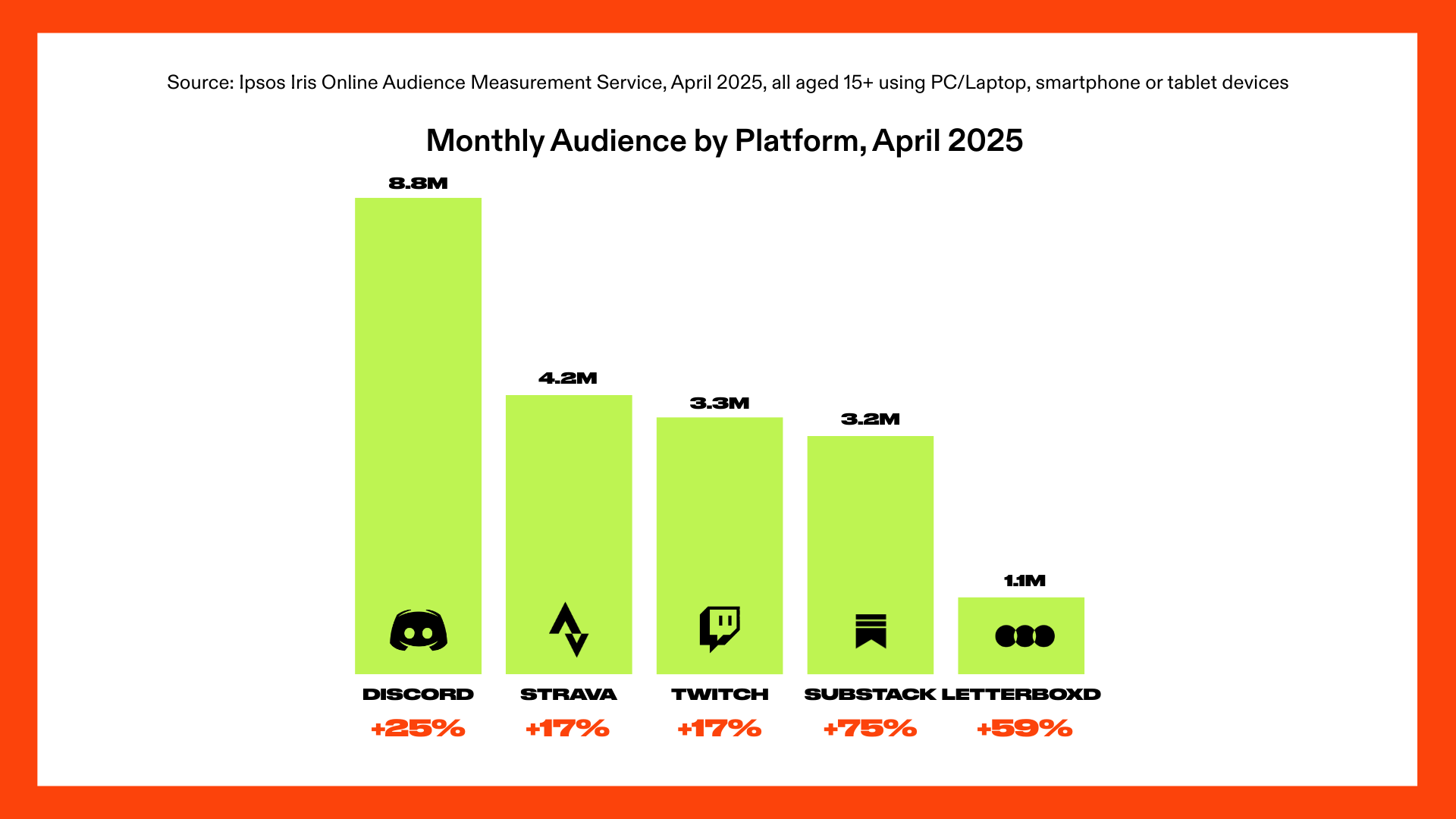
Discord
+25% platform usership growth YOY
Discord is a platform for creating communities, where people can chat via text, voice, and video. Originally popular with gamers but now used across a variety of interests, from book clubs to study groups, Discord’s offers organised chat rooms and voice channels for focused conversations and social connection.
Creators use Discord to build exclusive communities, foster direct fan engagement, and monetise their following through VIP access, hosting live events, making exclusive announcements, and creating interactive spaces for user-generated content.
Strava
+17% platform usership growth YOY
Strava is both a fitness tracking and social platform for athletes, especially runners and cyclists, that uses GPS to record activities like runs, bike rides, and hikes – it also allows users to connect, share workouts, give ‘kudos’, and compete on segments.
Influencers are tapping into Strava’s community function to promote brands through sponsored challenges, gear tagging, sharing fitness journeys, and comment sections to boost engagement. They help drive awareness for fitness brands, create content that encourages their followers to participate in activities, and turns fitness into a social experience.
Twitch
+17% platform usership growth YOY
Twitch is a live streaming platform, owned by Amazon, and best known across the gaming community as a space for audiences to watch others play games. Now also being leveraged by verticals including music, art, cooking, and e-sports in real life content, viewers can interact with streamers and each other via live chat.
The Goat Agency is expert at leveraging creators across Twitch to create compelling content for their audiences. We worked with Activision Blizzard to help them reach audiences across the gaming vertical for ‘World of Warcraft: The War Within’, targeting active and lapsed gamers.
We produced a variety of scroll-stopping content across TikTok, YouTube Shorts, Instagram and Twitch and the success of this campaign was recognised with two industry award nominations for Best Gaming Campaign (The Shorty Awards) and The Drum Awards for Marketing EMEA.
Substack
+75% platform usership growth YOY
Substack is an online publishing service meets newsletter platform, empowering writers, journalists, and creators to build a direct relationship with their audience through subscription-based content. From newsletters, podcasts and videos, the platform allows users to monetise their work directly by charging for high-level premium content, also offering free options to their audiences.
Brands have leveraged substack creators to tap into their niche audiences, including Emily Sundberg and Free People and Hinge & Rare Beauty’s community-enriching content. Substack allows for more tailored and personalised content creation, affiliate marketing, and community management.
Good news, The Goat Agency are on Substack! For the latest cultural analysis, influencer commentary, and marketing hot takes, check out our Substack, Raised on Social.
Letterboxd
+59% platform usership growth YOY
Letterboxd is a platform built for film lovers. Users can log, review, rate, and discuss movies – often compared to the ‘Goodreads’ of movies. Users are able to build a digital diary of films they’ve watched, create custom lists – from favourite horror films to Oscar winners – follow friends and critics, and share their opinions through short reactions or more detailed essays.
As a central hub for film discovery, Letterboxd leverages high profile influencers by showcasing their activities – what they’re watching, what they’re reviewing, and what they’re ranking – making them the tastemakers who drive trends, validate the platform and foster community engagement. They use micro-influencers similarly, to reach passionate film fans natively and turn personal tastes into cultural currency to drive further discovery.
Influencer Marketing Trends 2026
2025 fundamentally reshaped the creator economy. AI moved from novelty to everyday utility – and into the core of media planning. Creators solidified their status as this generation’s cultural tastemakers, while social platforms drifted away from being truly ‘social’ toward infinite video feeds. We’re scrolling more than ever, yet ‘authentic’ engagement and lasting recall are increasingly difficult to achieve.
In 2026, brands must collaborate with creators and influencers to stay relevant, and they need a deep understanding of the macro forces driving trends and conversation. Building on our 2025 Unfiltered Report, we’ve identified the key consumer and online cultural shifts from this year and mapped how they should shape creator strategies and content marketing plans in 2026.
What lessons can brand marketers integrate into their 2026 strategies?
Human media reigns supreme
As AI continues to advance – and redefining how creators create – at the core, human connection, storytelling, and emotion remains paramount in brand marketing. It’s the human element – the shared feelings, narratives, and experiences – that resonate with audiences on a deeper level. Creators serve as a voice to your brand: a face to recognise, a story to hear, and the message you want to convey. They transform abstract values into tangible experiences that make people want to consume. If you’re not integrating these voices into your strategy you’re missing out.
We Need More than Just ‘Authenticity’ and ‘Relatability’: We Need Substance
In an increasingly skeptical world where trust in media is declining, consumers are moving beyond merely seeking ‘authenticity’ or ‘relatability’ from brands and their influencers. The focus for 2026 will be credibility. People are actively searching for voices that are not only genuine but also knowledgeable, trustworthy, and authoritative. This shift explains the growing trend of audiences consuming on more niche platforms and brands partnering with nano and micro-influencers. These creators often have deep expertise and highly engaged followers, offering knowledge that fosters genuine trust, making their endorsements far more impactful than broad-reach.
Leverage the Power of Connected Media
To effectively reach and engage diverse audiences in 2026, brands must adopt a truly omnichannel approach. This means maximising your presence on a mix of platforms, emerging on more niche platforms like Substack for in-depth content. With platforms like TikTok Shop rapidly scaling and rivaling established giants like eBay, brands must integrate seamless consumer experiences into their core strategies. This means working with creators in a 360 approach, allowing you to speak to their audiences wherever they show up and in the way they want to engage.
Be part of the cycle
If you want engagement, you can’t just track the cycle, you need to be part of it.
Audiences use social platforms to explore and engage with topics they care about. This interest is often shaped by creators – driving trends and initiating these conversations; refining these trends into a wider cultural moment. For brands, this means partnering with influencers who resonate with your target audience, consistently creating content that goes beyond ‘ads’, and instead builds a cultural conversation that the creator’s audience (and yours) deems important.
…
Interested? Goat is a global influencer marketing agency UK and US head-offices, with remote working hubs all over the world. Discover how we can support growing your brand by chatting to our team.
For more industry-leading insights, subscribe to our ‘Raised on Social’ newsletter and check out our Substack for the latest cultural trend analysis.