What is Influencer Marketing? A Practitioner Guide from Goat
What is influencer marketing in 2026?
Influencer marketing has moved past the single sponsored post. In 2026 it means sustained creator partnerships, paid amplification layered behind top content, and social commerce that closes the gap between discovery and purchase, often running across several markets at once.
The scale reflects that shift. The global market was worth approximately $33 billion in 2025, and is projected to reach around $40 billion by the end of 2026, according to Influencer Marketing Hub and Statista. It’s no longer a niche tactic. For most brands we work with, it’s a core media line item.
Our definition of influencer marketing is simple: brand storytelling delivered through people your audience already trusts. Not ads dressed up as content, but content that happens to be commercial because everyone involved gets something real out of it.

How influencer marketing works: the Goat approach
Every agency says it has a process. Here’s ours.
- Audience insight: We look at who your audience already trusts before we pick a single creator, not after.
- Creator vetting via IBEX: Our proprietary platform matches creators against 100,000+ profiles and a decade of performance data, not follower counts and gut feel.
- Brief and creative development: Clear commercial objective, real creative freedom. Content that reads like an ad performs worse.
- Cross-platform execution: TikTok, Instagram, YouTube, managed end-to-end, across however many markets the campaign spans.
- Paid amplification: Extends the best content beyond a creator’s own following.
- Measurement and reporting: Tracked through IBEX against the KPIs agreed at brief stage, not vanity metrics assembled afterwards.
That’s what separates a properly managed programme from a string of one-off posts booked through a marketplace.

Types of influencers and when to use each
Follower count is the least useful way to choose a creator. What matters is meaningful alignment between the creator, your objective and your audience, and that alignment can sit anywhere on the spectrum, not just in the middle of it.
| Tier | Followers | |
| Nano | 1K–10K | Deep trust, tight communities. Often used when credibility and local relevance matter more than scale. |
| Micro | 10K–100K | High engagement and real niche authority. Often used for precise targeting within a defined audience |
| Macro | 100K–1M | Broader reach that still holds credibility. Often used when scaling proven messaging into new audiences or markets |
| Mega | 1M+ | Mass cultural reach. Often used for big brand moments and launches where visibility is the objective |
There’s no default tier, and no single “best” one. We don’t believe in a one-size-fits-all approach: the right creator is whoever best fits the objective in front of us, and most of our campaigns deliberately mix several tiers because reach, trust and niche relevance rarely come from the same creator at the same time.

How to choose an influencer marketing agency
There are thousands of influencer agencies and platforms now. Most brands don’t struggle to find options, they struggle to tell them apart. Ask any influencer marketing agency you’re considering:
1. How do you identify and vet creators? Push past “we search a database.”
2. What does your measurement framework look like? KPIs agreed upfront, not a wrap deck assembled afterwards.
3. How do you handle multi-market campaigns? Genuine local adaptation, or just translation?
4. What does a wrap report actually include? Ask to see a sample.
5. How do you approach paid amplification? Built in from day one, or bolted on after?
We built IBEX specifically to answer all five with data, not merely opinion.

Snapdragon x Coachella
Bringing tech to life through culture-driven creators
Instagram. TikTok. Facebook. YouTube.

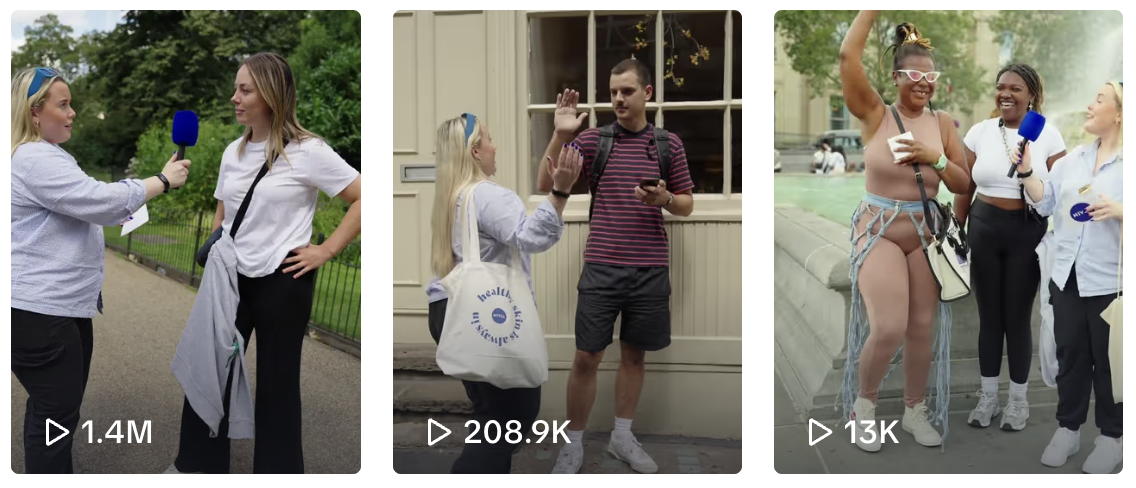
NIVEA: Building Brand Relevance
Making a legacy brand relevant with Gen Z
Facebook. Instagram. Pinterest. Podcasts. Snapchat. TikTok. YouTube.

FAQs
Is influencer marketing still effective in 2026?
Yes. The market is projected to hit around $40bn by the end of 2026, with ROI ahead of most other digital channels. Audiences are savvier though, so creator fit and real measurement matter more than posting volume.
What is the difference between influencer marketing and creator marketing?
Largely overlapping terms. “Influencer marketing” centres on people with existing audience influence, while “creator marketing” is a bit broader, including creators whose content brands license even without a large following attached. We work across both.
How long does a campaign take to deliver results?
Awareness and engagement move within days. Brand lift, consideration and sales impact typically need 8 to 12 weeks, especially for always-on programmes.
How do you measure influencer marketing ROI?
It starts with KPIs agreed before launch, then tracked through IBEX: impressions, engagement, earned media value, traffic, and sales attribution where possible.
Do I need a different strategy for different markets?
Usually, yes. Creator relevance and platform preference vary by market. We run campaigns across 37 markets and let local teams adapt the creative rather than shipping one global asset everywhere.
What’s the difference between a micro and a macro influencer?
Micro (10K–100K) wins on engagement and niche relevance. Macro (100K–1M) wins on reach while staying credible. Most strong campaigns use both.
Can influencer marketing work for B2B brands?
Yes, and it’s one of the fastest-growing parts of the industry. Fewer lifestyle creators, more industry experts and practitioners. Our work with IBM and Dell shows the same principle applies: trusted voices move decisions, in B2B as much as consumer marketing.
How much should a brand budget for influencer marketing?
There’s no universal number. Meaningful always-on programmes typically run from low hundreds of thousands to several million per year, depending on market coverage and tier mix. The real question is whether that budget is split intelligently across fees, production and amplification.
Influencer Marketing Without Borders

- Argentina
- Australia
- Brazil
- Chile
- China
- Columbia
- Denmark
- Finland
- France
- Germany
- Hong Kong
- India
- Indonesia
- Malaysia
- Mexico
- Netherlands
- New Zealand
- Norway
- Pakistan
- Peru
- Philippines
- Poland
- Portugal
- Puerto Rico
- Romania
- Singapore
- South Africa
- South Korea
- Spain
- Sweden
- Taiwan
- Thailand
- Turkey
- United Arab Emirates
- United Kingdom
- United States
- Vietnam