July 27, 2026
How did poppi Build a Culture-First Influencer Strategy That’s Reshaping FMCG Marketing?

poppi is a brand born online and powered by pop culture. What started as a kitchen experiment and a Shark Tank backed brand transformed into a $2 Billion acquisition from PepsiCo and a marketing strategy led by creator-first partnerships and strong community engagement. It’s clear poppi has made a deep stamp on the FMCG landscape. But how? And most importantly, what can other FMCG brands take away from their strategy?
In this blog, we’ll break down:
- The challenges of marketing in the FMCG landscape
- How poppi is innovating how CPG products are marketed
- The key pillars of their marketing strategy and why they’re so effective
- Key examples of how poppi has leveraged creators in their media planning
The Rise of poppi
What is poppi?
poppi is one of the brands leading the charge in the ‘health soda’ movement. Founded as a better-for-you alternative to traditional fizzy drinks, it combines prebiotic fibre, apple cider vinegar and lower sugar levels to create a soda that feels a little more at home in a wellness routine than a traditional soda.
In other words: you can have your soda and drink it too.
What makes poppi particularly interesting is what sits outside that can as well as what’s in it. While its colourful range of drinks remains the core product, poppi has expanded into merchandising, brand collaborations, and creator-led campaigns that has positioned it as a lifestyle brand.
They’re a regular feature across TikTok and Instagram feeds, with its bright packaging and wellness credentials that make it a highly shareable moment. Rather than talking exclusively about gut health, poppi has focused on creating a brand that feels fun, aspirational, and culturally relevant; with their balance between health conscious messaging and lifestyle appeal being a key driver of poppi’s growth. By positioning itself as the soda for people who want taste with less ‘guilt’, poppi has carved out a distinctive place in the FMCG market.
@theburnouts How @drinkpoppi got the Shark Tank deal!! #allisonellsworth #poppi #drinkpoppi #theburnouts #founderstory ♬ original sound - The Burnouts
How has poppi evolved?
poppi’s rise from start-up to supermarket staple is one of the most closely watched growth stories in the better-for-you beverage space. Originally launched as ‘Mother Beverage’, founders Allison and Stephen Ellsworth gained national attention after appearing on Shark Tank, where they secured investment from Rohan Oza.
Following the show, the brand underwent a significant transformation, rebranding as poppi and refining its positioning around prebiotic soda. The new identity helped the company appeal to a younger, wellness-focused audience, while standing out in an increasingly competitive functional drinks market.
As awareness grew, so did their social media strategy. The founders regularly documented the brand’s journey across TikTok and Instagram, giving consumers a behind the scenes look at product launches, retail wins, marketing campaigns, and the realities of scaling a fast-growing FMCG business.
The next major chapter came when poppi was acquired by PepsiCo for $2 Billion, cementing its status as one of the most influential brands in modern soft drink marketing. From a homemade apple cider vinegar drink to an internationally recognised brand backed by one of the world’s largest FMCG brands globally.
Who is poppi’s Target Audience?
poppi is a brand built for lifestyle and aspiration. The brand resonates most strongly with Millennial and Gen Z who are interested in health and wellness but don’t want their favourite drinks to taste like a science experiment. They’re the people following their favourite creators’ recommendations and looking for products that fit seamlessly into their lifestyles.
What’s clever about poppi is that it doesn’t sell itself as a ‘health’ drink first. It sells itself as a fun, colourful experience. The branding feels more at home in an Instagram fridge restock, your hand at a party, or sipping after a spin class with friends. By combining wellness credentials with culture-first marketing, and highly shareable packaging, poppi has attracted an audience that cares as much about aesthetics as they do an ingredients list.
In other words, it’s a brand for people who want their fridge to look good, their drinks to taste good, and their social feeds to know about both.
The current FMCG Landscape
What are the Challenges in Marketing in the FMCG Space?
Fast-Moving Consumer Behaviour
Consumer preferences can change almost overnight, driven by trends, social media conversations, economic pressures, and shifts in priorities. FMCG brands need to react quickly to new demands, whether that’s healthier ingredients, sustainable packaging, or the latest viral flavour.
Intense Competition
From household names to disruptive challenger brands, FMCG categories are saturated with options. Supermarket shelves and online marketplaces are crowded, making it difficult for brands to differentiate themselves. This means marketers must work harder than ever to create memorable campaigns that cut through the noise and keep products front of mind.
Regulatory Changes
The FMCG industry must continually adapt to evolving regulations, particularly around food and drink marketing. In the UK, measures such as the HFSS Regulations (High Fat, Salt and Sugar) have changed how brands can advertise certain food and beverage products, forcing marketers to rethink promotional strategies and discover new ways to reach consumers while remaining compliant.
Declining Brand Loyalty
While brand loyalty is often seen as a positive, it creates a significant challenge for FMCG marketers trying to win new customers. Many consumers have trusted go-to brands that they’ve purchased for years, whether it’s their favourite soft drink, toothpaste, or supermarket snack. Convincing shoppers to break established habits and try something new requires brands to offer a compelling reason to switch, whether that’s through innovation, better value, stronger brand purpose, or standout marketing.
The Key Pillars of an Effective FMCG Strategy
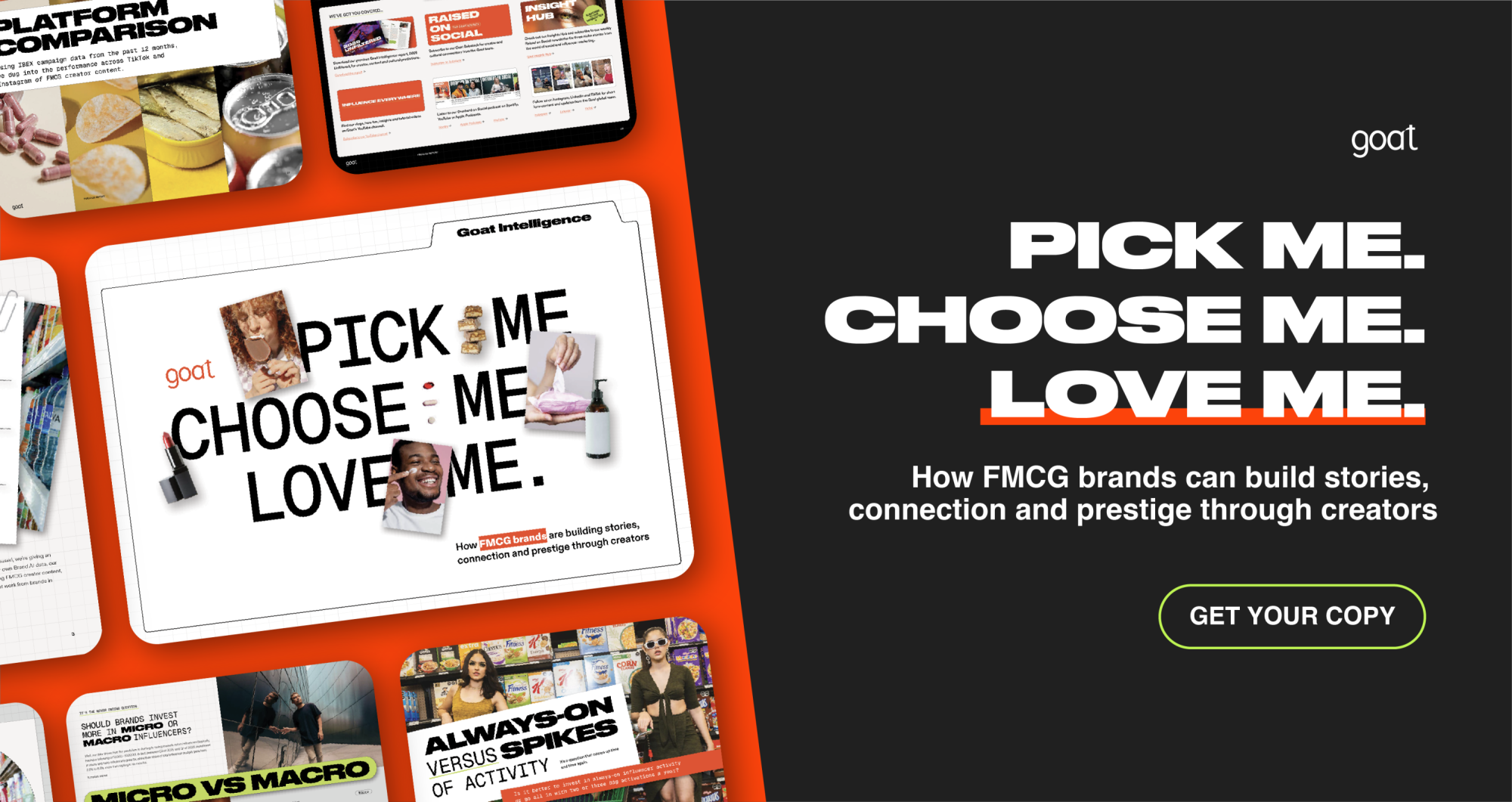
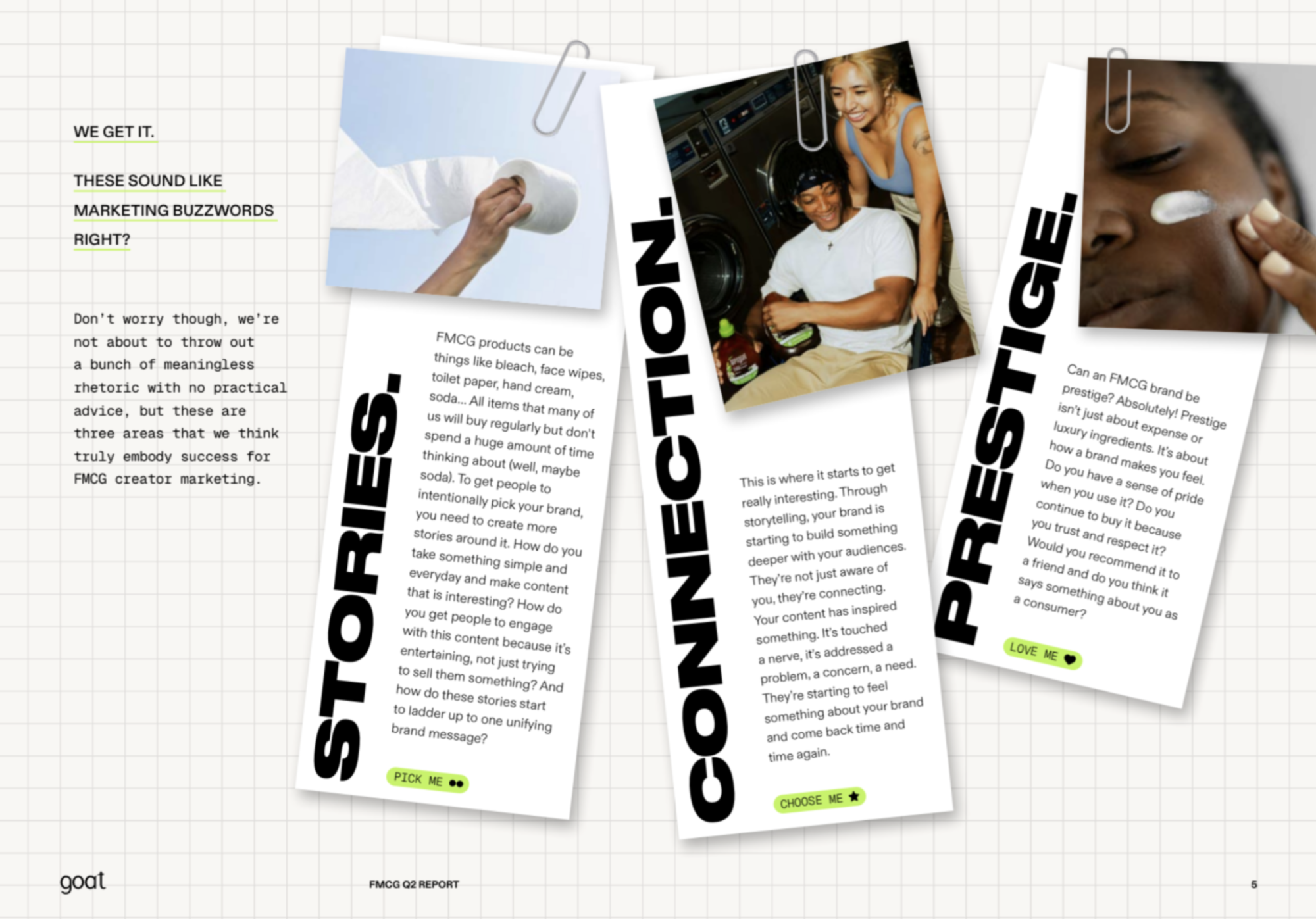
As detailed in our latest Goat Intelligence Report, the key to effective FMCG strategy can be broken down into three segments: Stories. Connection. Prestige.
Download the full report for more FMCG and poppi insight now!
Stories:
Intention is key in FMCG marketing. To get people to make choices, FMCG brands need to lean into the stories they tell. For poppi, their storytelling began way before they became the iconic brand they are today. Founder Allison Ellsworth was poppi’s personal ambassador, documenting the brand’s entire journey, from behind the scenes of building the brand to sharing the products and their benefits (whilst still prioritising the flavours she knew their customers would love). Plus, this story has became the red thread as they’ve evolved. While packaging shifted, the feel good and taste good messaging remains paramount.
Connection
You’ve got your story, but how do you make it resonate? Connection is what moves a strategy from brand awareness to brand loyalty. It recognises how it can intersect in their audiences lives – a pain point or a need – and thoughtfully addresses it. poppi recognised early on that a distinct challenge in the functional beverage market was choice paralysis. Customers felt like there was a compromise between a ‘healthy’ product and a delicious one. poppi highlights their aim to address that compromise in their strategy.
Prestige
One of the most powerful signals of an effective strategy is the level of prestige a brand is able to garner. But here’s the trick, prestige doesn’t necessarily mean luxury. Prestige focuses on how the audience feels. poppi’s prestige comes from how deeply it ties into the ‘it-factor’. It’s culturally fluent, heavily tunes into aesthetics, a personal favourite for Gen Z, and it feels ‘cool’. By drinking poppi, you’re part of a club of people who just get it.
How poppi is innovating the CPG space
From vibrant packaging and creator-led content to experiential activations and trend-driven campaigns, the brand consistently sells a feeling and an identity rather than simply a can of soda.
A key part of this strategy is poppi’s ability to tap into cultural moments and internet conversations. Whether participating in viral trends, reacting to popular social media formats, or referencing moments that audiences are already engaging with, the brand keeps itself firmly embedded in digital culture. Social content inspired by trends such as the Dot Cake craze or references to iconic Love Island catchphrases demonstrate how poppi prioritises storytelling, humour and relevance over product-first messaging.
This approach helps poppi feel like a natural part of consumers’ feeds and daily lives rather than a brand interrupting them with advertising. By continually finding new ways to connect its products to culture, entertainment and online communities, poppi has created a brand experience that extends far beyond what people drink.
@ritamenja I am so grateful to be a Poppi college ambassador this fall semester!!! @poppi shop 🫂💕🍓🍋🤭🍒🍋🟩🫐 #giveaway #backtoschool #poppi #sodasback #giveaways #school #fyp ♬ original sound - 🌊⭐️
What is poppi’s Influencer Marketing Strategy?
UGC Creators and Community-Led Content
User-generated content (UGC) sits at the heart of their strategy. The brand regularly benefits from their audience sharing organic unboxings, first impressions, and taste tests that introduce new flavours to audiences in a genuine way. As we know, authentic reactions often carry more weight than polished ads because viewers feel they’re getting an honest opinion rather than a sales pitch. However, where poppi regularly makes its mark is by not just benefiting from UGC content but actively encouraging it. poppi leverages Try Your Best, a community rewards program that offers community participants discounts and exclusive rewards by engaging with poppi using UGC content. This allows poppi to “mobilise” their community during big moments and empower existing brand fans as ambassadors.
Ambassadorships
poppi is a brand that truly recognises the power of curated influencer-brand partnerships, but this one has a specific back-to-campus twist. As highlighted, poppi’s core consumers are Gen Z, who are heavily tuned into social, culture, and aesthetics. So where better to find a pool of consumers to share content than college students?
Taking the form of ‘poppi college ambassadors’ through their poppi University program, university students become the creators, and are activated to host events, create their own poppi-focused content, and distribute poppi products and prizes and giveaways.
poppi doesn’t stop there. They understand the college environment intimately, tapping into Greek life by supplying custom cans stamped with the name of specific sororities by request. poppi are experts at setting themselves up for real connection with college communities, as well as encouraging organic content creation among entire networks of TikTok users, not just ambassadors.
Exclusive Brand Collaborations
Instead of sticking to traditional sponsorships, poppi partners with names that already live in the same cultural universe as its audience, helping it show up in places that feel exciting, unexpected and highly shareable.
Whether it’s teaming up with Love Island, collaborating with travel favourite BÉIS, or joining forces with skincare brand Bubble, poppi consistently finds ways to place itself at the centre of conversations its audience already cares about. These partnerships aren’t just about putting logos side by side; they’re about creating moments that feel naturally aligned with the lifestyles, interests and online habits of poppi fans.
The result is a brand that feels bigger than the drinks category. One day it’s part of your beauty routine, the next it’s popping up in your holiday packing checklist, and somehow it’s also found its way into your Love Island group chat. By partnering with culturally relevant brands and entertainment moments, poppi keeps itself fresh, fun and firmly embedded in the worlds its consumers want to be part of.
@loveisland Who’s got the best festival fits, and who’s crashing out? 👀 A backstage game with poppi has the Islanders spilling… @POPPI 🫧 #LoveIsland #LI ♬ original sound - Love Island
Top poppi Influencer Marketing Campaigns
Superbowl x Soda Thoughts
As highlighted, poppi positions itself as a healthier, more functional soda, offering a guilt free yet delicious alternative to others on the market. For Super Bowl LIX, poppi showed up with their ‘Soda Thoughts’ campaign, which focused on giving consumers the freedom to love soda again.
Featuring Alix Earle, Jake Shane, Rob Rausch, and even founder Allison, the campaign consisted of six ads highlighting moments of indecision: a diner, drive through, convenience store, girls night, pool party, and movie theatre. Each creator represented choice paralysis: what to pick in the diner, what to select at the drive in or which to pull from the fridge. The campaign completely embodied poppi’s storytelling, aligning with their compromise attitude to their product, while using Alex, Jake, and Rob as the decision makers, recommending poppi to the confused person.
As they put it… for drinking, not overthinking!
poppi x Love Island
Following their launch in the UK, poppi became the official soft drink partner for Love Island Series 13, supplying drinks in the villa for both in-show moments and behind the scenes exclusive content. Marketing Director at poppi UK Stephanie Herbert shared that poppi is “woven into the heart of villa life, fuelling firepitchats, sun-soaked afternoons, and every iconic “I’ve got a text” moment” and that this campaign is “designed to connect with a new generation of culturally plugged-in consumers” which blends poppi’s expressive personality with poppi’s similar social currency.
Similarly, poppi partnered with Ex-Love Islander Olandria ahead of Love Island US to announce that they were bringing back their popular “Punch Pop” flavour in a limited edition Love Island can so their audiences can sip on a can of “Poppilandria with the newest Love Island season playing in the background.”
@drinkpoppi first reactions to seeing the Jake Estate & the MickMansion with @Micky💋 & @Jake Shane ☺️🩷🍒 who’s ready to see more?! 🌴🫧 #poppi #drinkpoppi #festival #reaction #fyp ♬ original sound - POPPI
Coachella 2026
If there’s one thing poppi understands, it’s that great marketing doesn’t stop at the shelf. The brand’s iconic poppi houses at Coachella showcased their experience-led strategy in action. Rather than centring the brand itself, Poppi created fully customised spaces for creators Micky Gordon and Jake Shane, transforming them into the ‘Mickmansion’ and ‘Jake Estate.’ By designing the experience around the creators, their personalities and their friendship groups, Poppi generated content that felt authentic, social and highly engaging.
The activation blurred the lines between brand trip, creator content and cultural moment, giving audiences the feeling of exclusive access rather than a traditional advertisement. It’s a strong example of how Poppi invests deeply in a select group of creators, embedding itself naturally into their experiences and turning those moments into content that audiences genuinely want to follow.
The activation also highlights the value of Poppi’s long-term partnerships with creators like Jake Shane. As a recurring #poppipartner, Jake’s involvement feels like a natural extension of his existing relationship with the brand rather than a one-off sponsored appearance. That familiarity builds credibility with his audience, making the content feel more like a genuine glimpse into a partnership that has developed over time. It’s a reminder that the most effective influencer marketing often comes from sustained creator relationships, where trust and brand affinity reign supreme.
How Poppi are winning with Gen Z
Health-Conscious Consumers
Poppi arrived at the perfect time for a generation that is increasingly mindful of what they consume. As Gen Z continues to prioritise wellness and better-for-you alternatives, Poppi has positioned itself as a fun, accessible option that feels healthier than traditional soft drinks without sacrificing taste. Rather than leading with functional benefits alone, the brand packages wellness in a way that feels aspirational, making gut health feel less like a health trend and more like part of an everyday lifestyle.
An Aesthetic-Driven Generation
Poppi understands that for Gen Z, great branding is almost as important as great products. Its bright colour palette, playful packaging and highly shareable visual identity make the brand instantly recognisable across social feeds. The brand’s aesthetic-first approach mirrors the strategies of creator-founded brands and influencers, where products double as lifestyle accessories. Similar to creators like Addison Rae, who successfully built audiences around a distinct visual identity, Poppi has created a brand world that consumers actively want to be part of.
A Culture-First Approach
Poppi actively participates in culture. Whether it’s tapping into trending social conversations, partnering with relevant creators or showing up at major cultural moments like Coachella, the brand consistently feels present where its audience is spending time. Combined with strong community engagement and creator-led storytelling, this approach helps Poppi stay relevant without feeling like it’s trying too hard. Instead of marketing at Gen Z, Poppi becomes part of the conversations they are already having.
Leveraging Humour and Relatability
One of Poppi’s biggest strengths is its ability to avoid taking itself too seriously. While many wellness brands lean into expertise and education, Poppi balances its product messaging with humour, memes and relatable social content that feels native to platforms like TikTok and Instagram. This lighter tone makes the brand feel approachable and human, helping it build stronger relationships with consumers while standing out in an increasingly crowded health and wellness market.
Why is poppi a Good Case Study?
Few brands have disrupted the FMCG landscape quite like poppi. In just a few years, the brand has evolved from a challenger start-up into one of the most talked-about names in beverages, proving that creator marketing and community building can be just as powerful as traditional advertising.
What makes poppi such an interesting case study isn’t simply its rapid growth, but the way it has achieved it. Rather than relying on product-led messaging alone, poppi has built an entire lifestyle around its brand. Every creator partnership, collaboration, campaign and cultural moment reinforces the same identity, making the brand feel consistent wherever consumers encounter it.
For FMCG marketers, poppi shows that people don’t just buy products; they buy into brands they feel connected to. poppi demonstrates how investing in brand-aligned creators, encouraging community participation and showing up in culture can transform an everyday consumer product into something people actively want to talk about and share.
As the FMCG industry becomes increasingly competitive, brands that can combine compelling storytelling with genuine cultural relevance will be best placed to cut through. poppi shows that when creators, community and brand identity work together, even the most established categories can be disrupted.
…
If you’re ready to build an FMCG marketing strategy that’s culturally in tune, community-first, and works long term, get in contact with our team.
For more of the latest culture and creator trend analysis, check out our Substack, ‘Raised on Social’, YouTube, and Insights Hub.
Other articles you might like
Pick Me. Choose Me. Love Me. The FMCG Influencer Marketing Report
- Beauty & Health
- FMCG
- Food & Drink
Micro Influencer Marketing: How Can Brands Work with Micro Creators?
- Travel and Leisure
- Beauty & Health
- Fashion & Apparel
- FMCG
- Food & Drink
- Gaming & Entertainment
Goat’s Paid Media Services: Shifting the Paid Social and Programmatic Landscape
- Travel and Leisure
- Beauty & Health
- Fashion & Apparel
- FMCG
- Food & Drink
- Gaming & Entertainment
- Tech & Apps
Stop Picking Influencers by Follower Count. Here’s What FMCG Brands Should Do Instead
- Beauty & Health
- FMCG
- Food & Drink
- Gaming & Entertainment
The Top 10 Cleaning Influencers UK Brands Need to Work With
- FMCG
Easter Influencer Marketing | A Guide for Food and Drink Brands
- FMCG
- Food & Drink